
America Without Accountability
How The Next Midterms Could Break Public Trust

The United States is entering a historic crossroads. At home, trust in institutions is collapsing. Abroad, the world is becoming more unstable and more dangerous. Together, these forces are converging into a single test that will arrive with the next midterm elections. The biggest threat our nation faces isn’t overseas; it is right here at home.
Will there be real accountability for the actions taken against the people of this country or will those in power continue to evade responsibility? The answer will shape the outcome of the midterms and the direction of our nation for years to come.
This is not just another election cycle. In the current geopolitical environment with wars, energy shocks, sovereign debt concerns, cyber threats, censorship regimes, and economic realignments, the United States cannot afford a domestic crisis of legitimacy. Yet that is exactly what is building. If there is no serious move toward accountability between now and the midterms, the political and social consequences will be consequential.
Geopolitics And the Domestic Crisis of Trust
The world is moving quickly toward a more fragmented order. Rival powers are forming new blocs and alternative financial systems. Energy routes and shipping lanes are contested. Cyber attacks on infrastructure are no longer rare events, they are normal background noise. Information warfare is constant and often invisible.
In that kind of world, a nation needs internal cohesion, predictable institutions, and a shared sense that laws apply to everyone. Instead, many Americans believe the opposite is true. They see one set of rules for political insiders and another set for ordinary citizens. They see selective enforcement of the law, selective prosecution, and selective media outrage.
When people see intelligence abuses go unpunished, financial crimes brushed aside, corporate and government collusion ignored, and years of lies about major scandals quietly rewritten, they draw a logical conclusion. The system protects itself. That belief has become one of the most powerful forces in American politics.
If this perception is not confronted with visible accountability, it will not simply vanish. It will explode at the ballot box, in public discourse, and in the way people relate to the government itself.
What Happens in the Midterms If There Is No Accountability
If there is no clear sign of accountability before the next midterms, several outcomes are highly likely. None of them is good for the stability of the country.
First, voter participation will split into two extremes. Some citizens will stay home in disgust, convinced that voting does not matter because the same people remain in charge regardless of the result. Others will become more energized and more radical, looking for any candidate who promises to disrupt the system, even if that candidate has no coherent plan beyond punishment and revenge. The center becomes hollow.
Second, distrust of election processes will deepen. When people see elite wrongdoing ignored for years, they start to doubt that those same elites will run honest elections. Fair or not, that is the connection people make. If the system shields insiders from prosecution, why would it not also tilt the playing field in more subtle ways? Legal changes, procedural tweaks, censorship of narratives labeled as misinformation, and the influence of money and media will all be interpreted through this lens of suspicion.
Third, the midterms are likely to produce a more fragmented political landscape. Candidates who run directly against the permanent political class will gain strength. Incumbents who are seen as part of the problem will face primary challenges or surprise defeats. Third-party or independent candidates may not win many races, but they can siphon off enough votes to scramble outcomes. The traditional party structures will be stressed as coalitions break and regroup.
Fourth, whichever side wins in the midterms will not gain broad legitimacy if the demand for accountability has been ignored. The losing side will insist that abuses were never addressed, that investigations were incomplete or blocked, and that the same networks of power still sit above the law. The winning side will claim a mandate but will govern in an environment where half the country sees the result as confirmation that corruption wins.
This is how republics slide into chronic crisis. Elections keep happening, but they no longer settle disputes. They become episodes in a continuing war over who controls the machinery of power, not civic moments where citizens feel heard and respected.

The Geopolitical Price of Domestic Evasion
The consequences will not stay inside American borders. Foreign leaders and adversaries closely watch these dynamics. When they see the United States unable or unwilling to enforce accountability against its own leadership, they draw conclusions about its resolve, coherence, and vulnerability.
If the midterms arrive with no meaningful accountability, rival powers will see a distracted nation paralyzed by internal mistrust. That is when they push boundaries. It might show up as bolder moves in contested regions. It might appear as more aggressive cyber operations, more disinformation campaigns targeting American voters, or more economic pressure that aims to divide allies from the United States.
Allies notice as well. When they see American institutions unwilling to confront wrongdoing inside their own system, they begin to question security guarantees and political promises. Trust is the real currency of alliances. It is hard to ask other nations to stand firm in dangerous situations when you cannot show that your own government will stand firm for the truth.
In other words, the refusal to hold insiders accountable does not just hurt American citizens. It weakens the strategic position of the United States in a world that is already unstable. The midterm elections will be interpreted globally as a signal of whether Americans still insist that the rule of law matters or whether the political class can continue to escape consequences.
The Psychological Impact on the American People
Accountability is not only a legal or political concept. It is psychological. When people believe that wrongdoers at the top are protected, something changes inside them. They become more cynical. They become more fatalistic. They become more tempted to cut corners themselves because they no longer believe that fairness is real.
If the midterms arrive and there has been no serious effort to investigate, expose, and correct abuses of power, that cynicism will harden. Citizens will increasingly see institutions as hostile or irrelevant. Parents will tell their children that the system is rigged, with integrity punished while corruption is rewarded. That is not sustainable in a republic. A free society requires a minimum level of faith that justice can still prevail. It does not require blind trust, but it does require the belief that truth can eventually overcome lies and that power can be restrained.
Without accountability, that belief evaporates. Once lost, it is extremely difficult to rebuild. The midterms will then function less as a normal election and more as a public verdict on whether Americans still see a future for reform inside the existing framework or whether they are already mentally exiting the system.
Accountability Could Change the Midterm Trajectory
It is important to understand that the outcome is not fixed. The trajectory can change if there is visible, credible movement toward real accountability before the midterms. That would require more than symbolic hearings and carefully managed reports.
It would mean serious investigations that follow evidence wherever it leads. It would mean subpoenas that are actually enforced. It would mean consequences for officials who lied, abused authority, violated civil liberties, or enriched themselves through inside deals. It would mean transparency about past crises and scandals, not selective disclosure that protects the powerful while feeding the public just enough information to manage outrage. If even part of this began to happen, the mood of the country would shift. People would still be angry, but they would see that their demands are not being completely ignored. Some of the most explosive frustrations would be channeled into constructive action rather than despair.
In such a scenario, the midterms would still be intense, but they would be a contest over competing visions for the future rather than a referendum on whether the system is redeemable at all. Candidates who take accountability seriously would still face skepticism, but they would not be dismissed outright. The election results would have a greater chance of being accepted as legitimate, even by those who are deeply dissatisfied.
What Voters Can Do Before the Midterms
There is a natural temptation to treat accountability as something distant, reserved for prosecutors, judges, and committee chairs. That is partly true, but it is not the whole story. Voters still have power, and that power grows when it is informed and focused.
Citizens can demand clear answers from anyone who asks for their vote. Do they support full investigations into past abuses or only limited inquiries that avoid sensitive areas? Will they support transparency even if it damages their own party, or only when it hurts their opponents? Will they vote to strengthen protections for civil liberties and whistleblowers, or will they quietly support the same structures that allowed surveillance and censorship to expand?
Voters can also refuse to reward evasive language. Politicians are experts at speaking in circles about mistakes being made or lessons being learned without naming specific people or actions. When you hear that, the follow-up question is simple. Who exactly will be held responsible? If there is no answer, then there is no accountability.
The Role of Media and Alternative Platforms
Legacy media outlets and large platforms have played a major role in shaping public perception of scandals, investigations, and geopolitical crises. Many Americans believe that coverage has been selective and that narratives have been curated to protect connected interests.
As a result, independent media, investigative journalists, and citizen researchers have become more important than ever. They are not perfect, but they are often the ones willing to follow stories that corporate outlets avoid. They can help surface documents, testimony, and timelines that expose how key decisions were made and who benefited from them.
For accountability to take root before the midterms, these alternative voices will remain critical. They must commit to accuracy and documentation, not just outrage. When they uncover information, it should be verifiable and sourced so it can withstand scrutiny. That is how truth spreads in a skeptical age.
Voters have a role here as well. They can support outlets that pursue serious investigations. They can share articles and interviews that provide evidence rather than just slogans. They can push back against the narrative that the public should simply move on from unresolved scandals in the name of unity or stability. Unity built on silence is not real unity.
The window for corrective action is still open, even if it is narrowing. That window will not be held open by slogans. It will be held open by truth-telling, courage, and the willingness to confront powerful interests that prefer endless investigations with no consequences.
Every citizen has a decision to make in the months leading up to the midterms. You can accept the narrative that nothing can be done and that accountability is unrealistic or you can insist that no republic can survive when wrongs are never righted, and lies are never exposed.
The future of our nation will not be decided only by global events or elite negotiations. It will be decided by whether the people of this country still demand accountability from those who govern in their name.
If that demand grows louder, clearer, and more focused before the midterms, the election can become a turning point toward renewal. If it does not, the midterms may instead mark the moment when millions of Americans decide that the promise of equal justice under law was only a slogan after all.
The choice is still in front of us.
Accountability now or instability later?
Upcoming Events
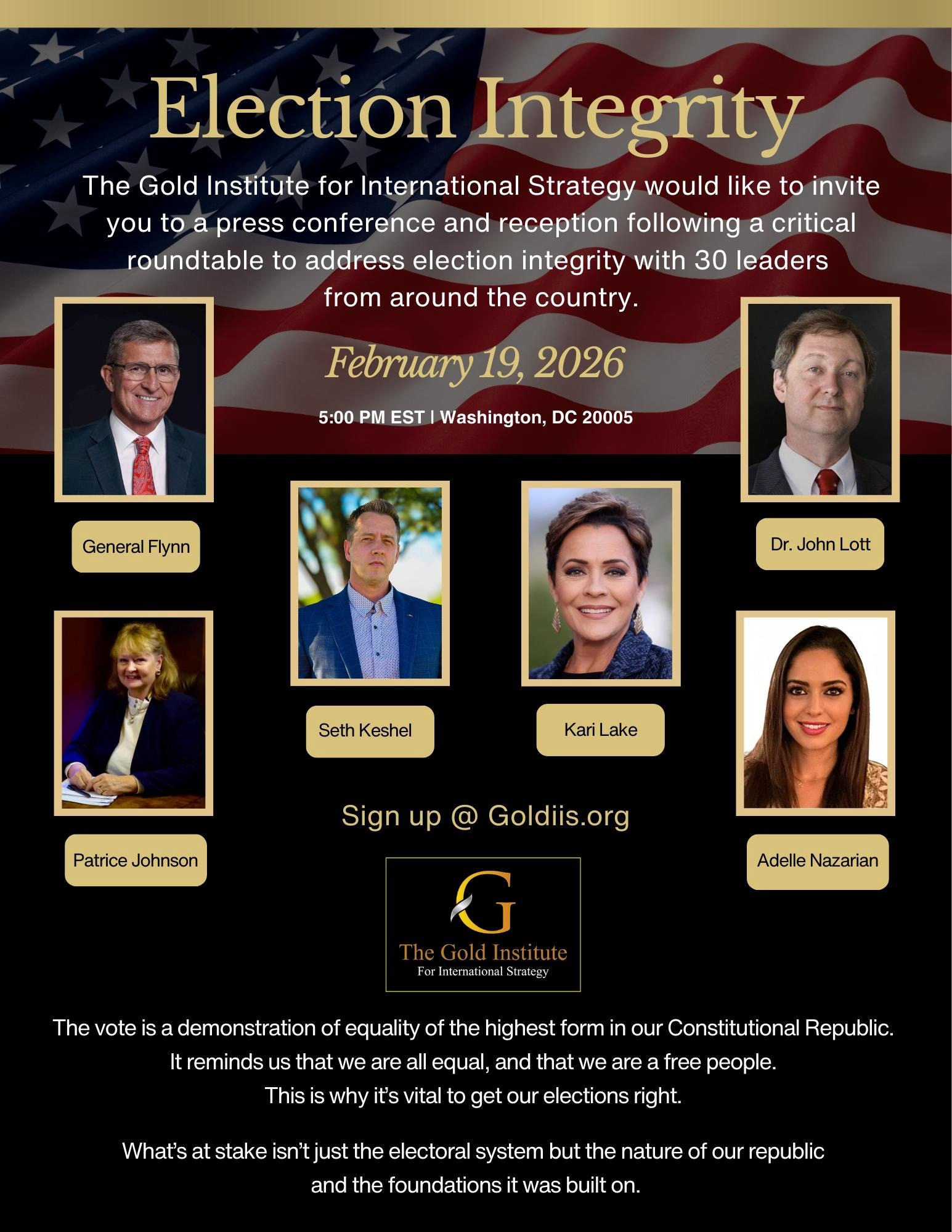
Election Integrity Reception
February 19th | 5:00 pm
Speakers from the election integrity summit, along with their guests and the media, are invited to drinks and hors d’oeuvres. Leaders from the Election Integrity Roundtable will present results.
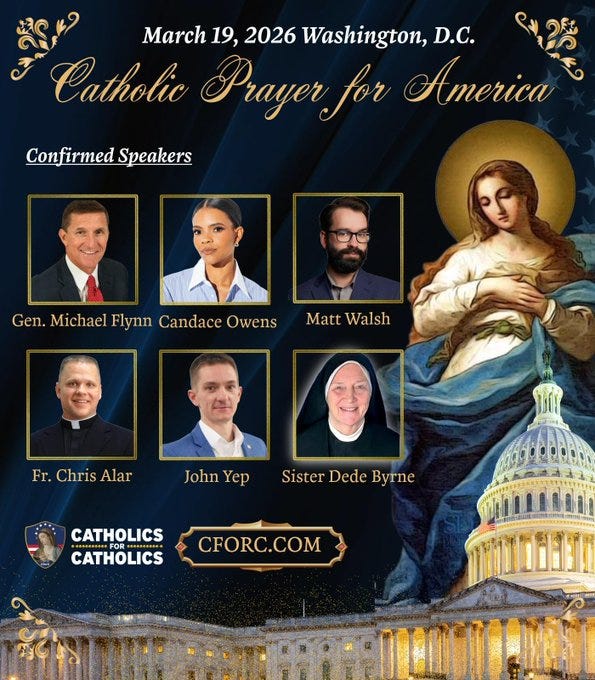
Catholic Prayer for America Gala 2026
March 19th | 6:00 pm
America is in need of great prayer as forces from outside and within seek to destroy her. Christ knows the battles we are facing and advises us to affront these challenges with His commanding words, “Watch and Pray” Mt 26.

Independent Media Gala
April 22nd | 6:30 pm
A celebration in honor of Patriots who operate free from government control in search of the truth, publishing free from the pressure of power. Journalism unbeholden to institutions. This will rival the upcoming White House Correspondents’ gala to make it clear that independent journalists are the new mainstream media!
Gen Flynn, Sir;
An argument could be made that there has not been any real trust in the institutions of our government for decades. I grew up in the 50s where family and friends would gather around the kitchen table and spend the evening "solving the problems of the world", virtually all of which focused on the criminals in government. Fast forward to today where anyone with a functional brain must admit that the situation has gotten much worse as everyone in government is now corrupt to one degree or another. Granted some are more corrupt like those who steal billions while spewing lies about helping Americans, and this happens in both parties.
Frankly, after watching the theater of AG Bondi's testimony which was all talk and no cattle, I concluded that we have passed the point of no return, for if political theater is presented as actually accomplishing something of significance rather than being a show without any basis in reality other than to hide the truth, America is already finished, but we allow ourselves to be deluded rather than admit the fact that there is no longer a nation of laws called America as laws no longer are enforced here, except when the criminals in both parties want to persecute their enemies.
We need a third Party. I never thought I would think that but this uniparty system is a scam on Americans. We need a true America First Party.
#FlynnGabbard2028