
The Crossing Isn’t Finished

I have spent thirty-three years in uniform and a good deal more than that studying how nations are born and how they endure. This Fourth of July marks two hundred and fifty years since fifty-six men sat in a sweltering room in Philadelphia and signed their names to the Declaration of Independence. I want to take you back into that room, and then I want to take you two hundred and fifty years in the other direction, because a milestone this size demands that we look both ways down the road.
Picture Philadelphia in the summer of 1776. The city sat low along the Delaware River, and by July the heat settled over it like a wet wool blanket that never lifted, day or night. The windows of the Pennsylvania State House were shut tight against spies and eavesdroppers despite the heat, so the men inside debated in heavy wool coats, sweat running down their backs and soaking through their linen shirts. Horseflies drawn by the stables nearby got in anyway and buzzed the room all afternoon. There was no air conditioning, no ventilation, no relief of any kind, only candlelight after dusk, the scratch of quill on parchment, and the low murmur of fifty-six men arguing, sentence by sentence, over the future of a country that did not yet legally exist. Some of them had ridden for days on horseback to reach that room. Some had left wives managing farms alone and children they would not see again for months. When they finally put their names to that parchment, they were signing a document the British Crown would call a confession of treason, and in 1776, treason carried one sentence. There was no institutional safety net waiting to catch any of them if the Revolution failed. There was a rope, a trial before a Crown court, and a family left behind to answer for it.
They signed anyway.
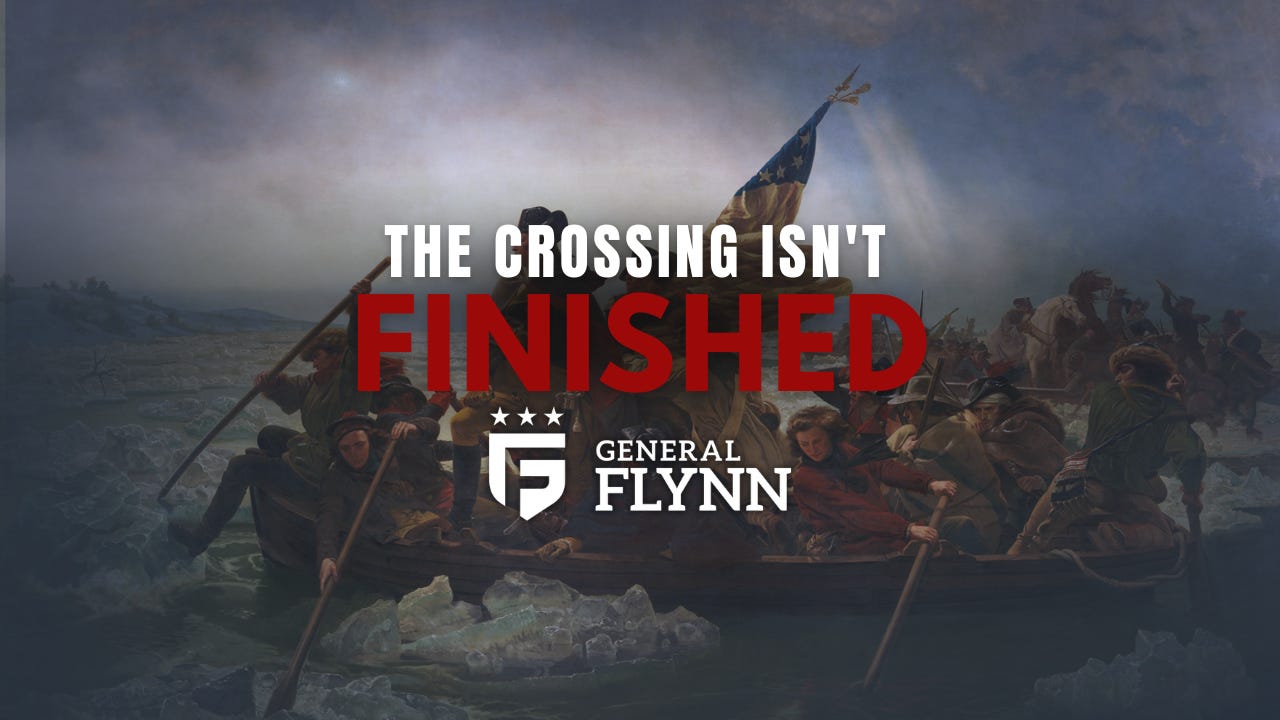
Richard Stockton of New Jersey, a respected judge who had given up a quiet legal career for that room, would later be dragged from his bed in the middle of the night by loyalist raiders, marched through the cold in restraints, and thrown into a New York prison. He was eventually released, but his health never recovered. He died a broken man only a few years after the war ended. Thomas Jefferson’s estate at Monticello was raided by British forces before the fighting was through, his fields stripped and his household scattered. George Washington went eight full years without drawing a salary while commanding an army that was starving, freezing, and shrinking by the week, an army held together by nothing but discipline, faith, and a stubborn belief in the cause they had signed onto. On Christmas night in 1776, with morale collapsing and enlistments about to expire within days, Washington loaded his remaining men into flat-bottomed Durham boats and crossed the ice-choked Delaware River under cover of darkness and a driving sleet storm, then marched them nine miles through the snow to strike the Hessian garrison at Trenton before dawn. He understood plainly that retreat meant the death of everything he had already staked his life on. Men froze standing up in those open boats that night. Two soldiers died of exposure before they ever reached the far shore. Others marched on feet wrapped in rags because their boots had worn through to nothing, leaving bloody footprints in the snow behind them the whole way to Trenton.
These were not reckless men chasing glory but serious men who had studied history before they went out and made it. John Adams defended British soldiers after the Boston Massacre because he believed every man, even a soldier wearing the uniform of an occupying army, deserved a fair trial under the law. He took that case fully aware it could end his standing in Boston overnight. James Madison spent years poring over the collapse of ancient confederacies, tracing failures all the way back to Greece and Rome, before he ever wrote a single clause of what would become the Constitution. He refused to guess at a system of government when history had already run the experiment and recorded the results in painstaking detail. The Founders read Cicero and Polybius by candlelight so they would not repeat the mistakes that buried the Roman Republic centuries earlier. They deliberately built a constitutional Republic rather than a pure democracy. They understood that unchecked majority rule eventually turns on itself and eats its own. Power was divided deliberately across three branches and two levels of government, so that no single man, no single office, and no single mob could ever gather all of it into one fist.
That structure has now survived two hundred and fifty years of war, depression, and civil conflict that by any reasonable measure should have broken it more than once. It survived because it was built by men willing to trade comfort, wealth, and personal safety for a principle they believed came from God and was worth dying to secure. It survived in every generation since because ordinary Americans kept showing up to defend it, in courtrooms and town halls and frozen river crossings of their own, long before any of those fights ever reached the national stage or made the history books.
Now look two hundred and fifty years ahead, to a Fourth of July in 2276 that none of us will live to see. It exists only as a set of choices that still await people who are not yet born. Everything Stockton, Jefferson, Adams, Madison, and Washington paid for in blood, imprisonment, and ruin only reaches that future if enough Americans between now and then are willing to defend it the way that first generation did. History does not glide forward on its own momentum. It moves because somebody in every generation decides the cost of holding the line is worth paying, the same way it moved because fifty-six men in a hot room decided a rope was an acceptable risk.
I have spent my career studying the kind of warfare that does not look like warfare at all. The slow campaign to capture a nation’s institutions, its schools, its information, and its confidence in itself, without ever firing a shot. That is the fight standing between the country as it exists today and whatever it will be in 2276. If that fight is lost by neglect, by a citizenry too comfortable or too distracted to defend what it inherited, the America two hundred and fifty years from now will not look like a fallen empire in a history book. It will look like a shell bearing the old name, governed by forces the founding generation would neither recognize nor accept. Its sovereignty traded away one quiet concession at a time.
The distance between those two futures is not measured in technology or wealth. It is measured in character, in whether enough Americans between this Fourth of July and that one are willing to do the unglamorous work of citizenship the founding generation did first. Precinct committeemen, School boards, County commissions, and Courtrooms. The same ground Adams and Madison worked before any of it became history. Nobody in 1776 knew whether their gamble would still be standing in 2026. We do not know whether ours will still be standing in 2276. The only honest answer either generation has ever had is the same one. It stands if we make it stand.
This is the story every American should carry into this Fourth of July, looking forward at what is still owed. Fifty-six men crowded into a hot, airless room bet everything they had, their homes, their fortunes, and their lives, on the idea that free people, answerable to God and governed by law, could rule themselves better than any king ever could. We have lived inside the result for two hundred and fifty years. Whether a free people is still living inside that result two hundred and fifty years from now depends entirely on what we do with what we were given. It is worth carrying forward with the same seriousness the Founders carried into that room in Philadelphia two hundred and fifty summers ago.
God bless this Republic on its two hundred and fiftieth birthday. God grant that it sees its five hundredth.
Recent Media
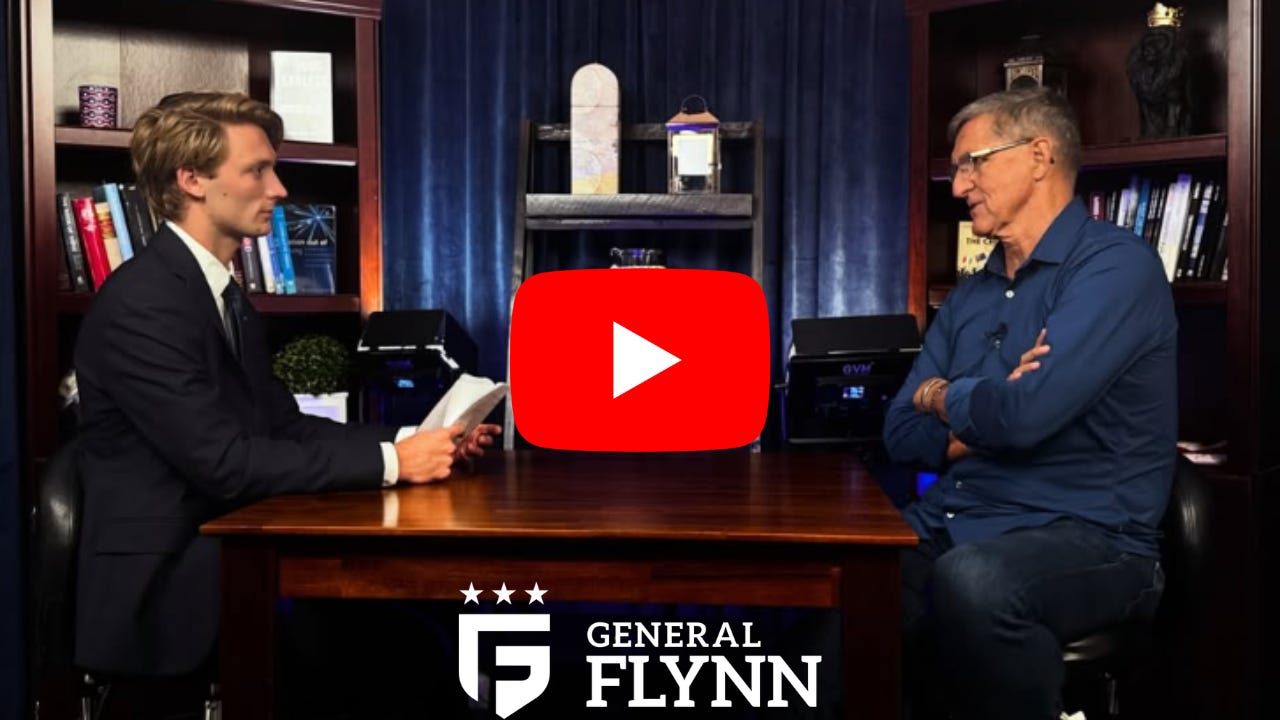
The Untold Story of General Michael Flynn | CCN Exclusive Interview
Gen-Z anchor, Camden Bedinghaus, speaks with Gen. Michael Flynn about his background, values, military career, and lessons for young Americans. Flynn recalls growing up in a large family in Rhode Island, surfing and playing sports, struggling academically early in college, then turning things around after receiving an Army ROTC scholarship, which led to a 33-year Army career and three master’s degrees. He describes combat service, leadership principles, and resigning from a senior intelligence role after refusing to give false testimony to Congress about threats like Al-Qaeda and the rise of ISIS. General Flynn discusses being attacked publicly, pleading guilty to protect his family, the role of faith and family in suffering, and urges young people to pursue lifelong learning, choose the “harder right path,” rebuild trust, and engage locally to create national impact.
Bravo General A Wonderful Read.
Semper Fidelis
Brought tears to my eyes and heartfelt appreciation for why these fine upstanding men did for us. USA!